Skip to the content

Your critical journeys, checked around the clock

A production check runs a flow against the build your customers have, as often as every 5 minutes, and tells you the moment it stops working.

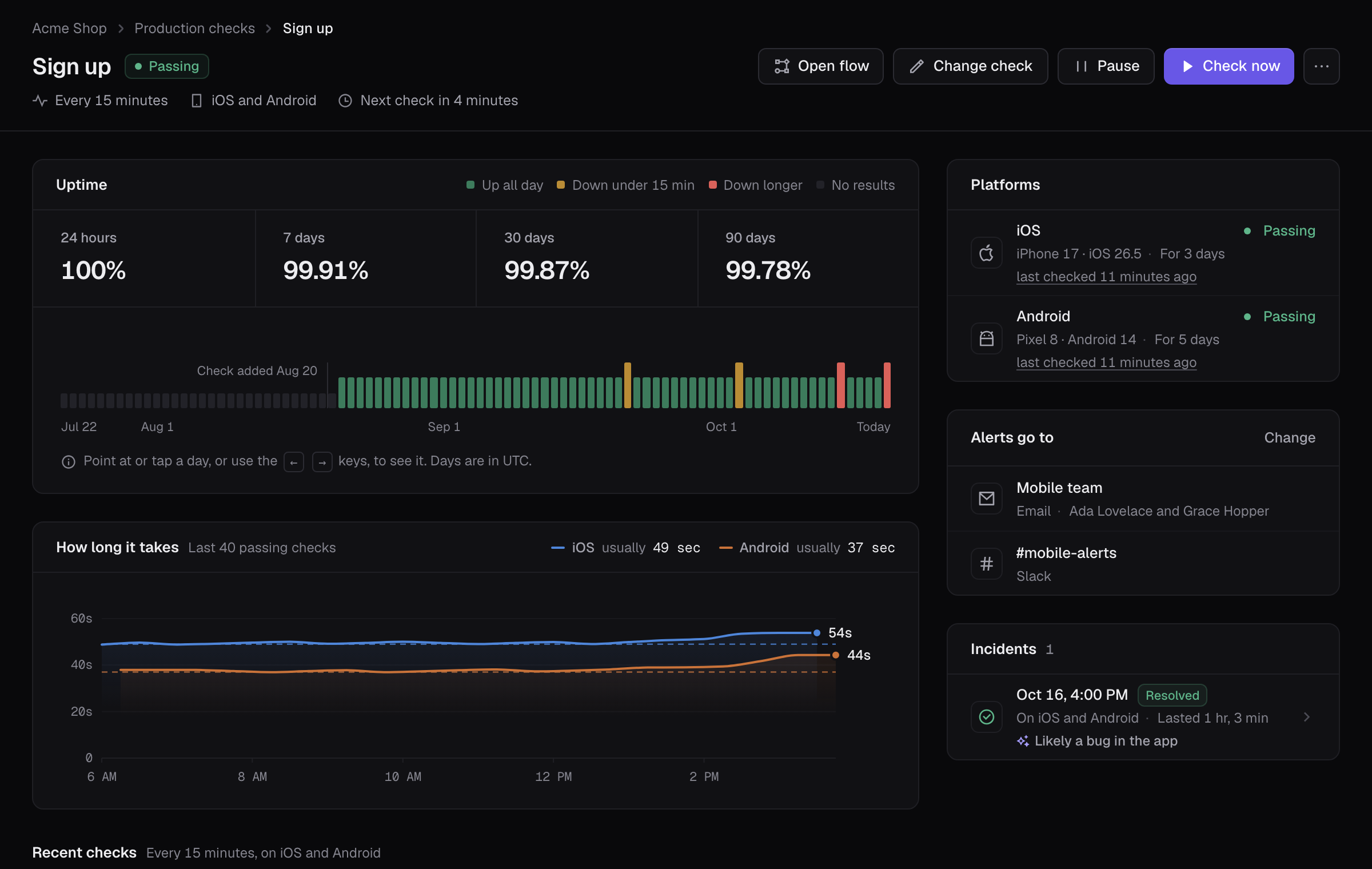
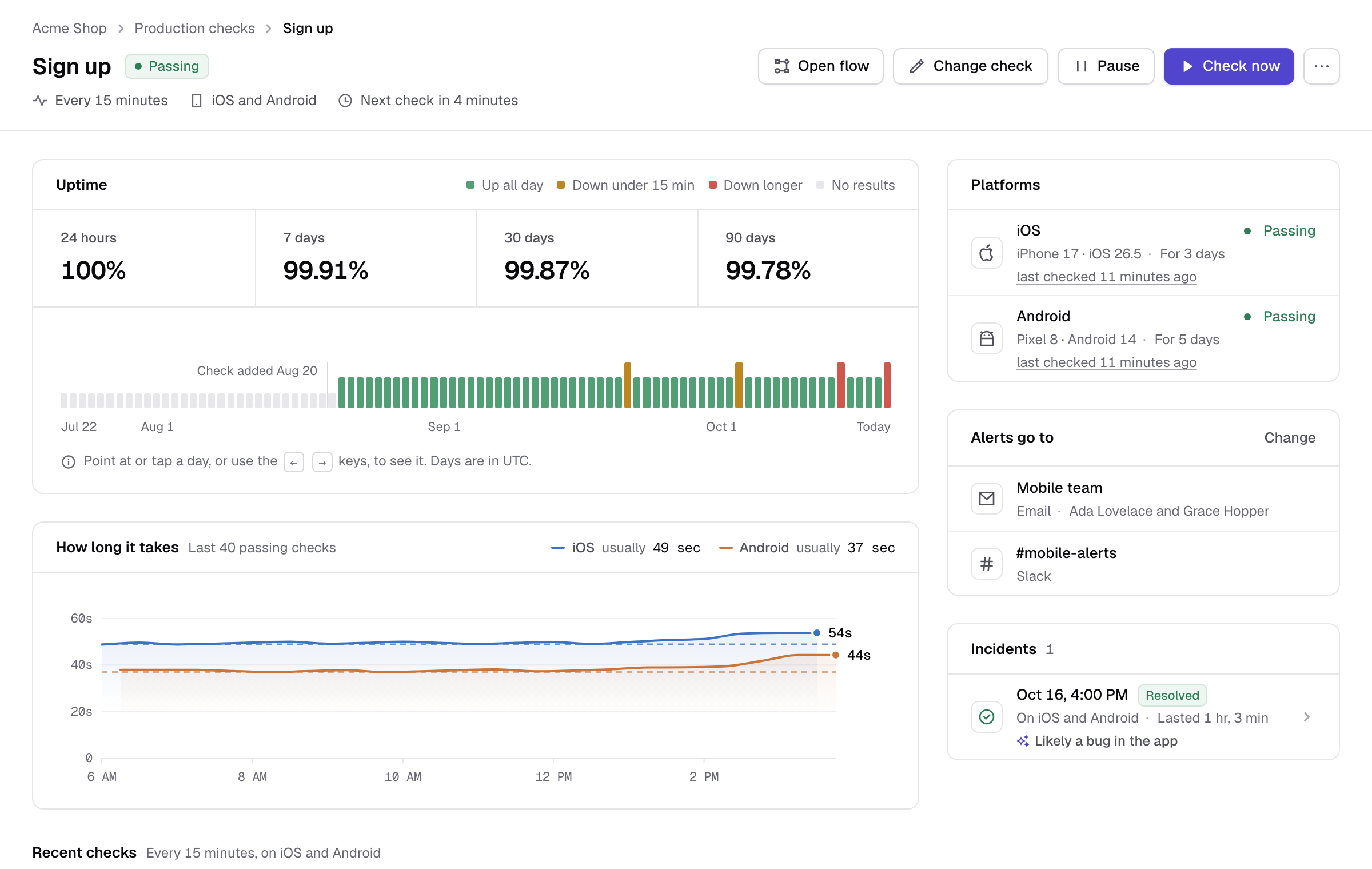
A production check for sign-up in Trailcam: passing on iOS and Android, 99.87% up over 30 days, with a bar for each day, how long it takes, and where alerts go.A production check for sign-up in Trailcam: passing on iOS and Android, 99.87% up over 30 days, with a bar for each day, how long it takes, and where alerts go.A production check for sign-up in Trailcam: passing on iOS and Android, 99.87% up over 30 days, with a bar for each day, how long it takes, and where alerts go.

Built so an alert means something

Every check runs on its own minute within its interval, so a project's checks don't all start at once.

  • Checked once more first

    A failure is run again at once, on the same flow and build. Only a second failure opens an incident, so a blip doesn't wake you.

  • Alerts where your team is

    Email on every plan; Slack and signed webhooks from Starter; PagerDuty on Business, opened and resolved with the incident.

  • Flapping, not reopened

    A journey that keeps breaking and recovering is marked as flapping: its incident reopens instead of a new one each time.

  • Maintenance windows

    Pause a project's checks while you ship, once or every week, in your time zone. Nobody is alerted in a window.

  • Uptime, day by day

    How much of the last 24 hours, 7, 30 and 90 days each check worked, and a summary for everyone every Monday.

  • The build your customers have

    Checks run on each platform's production build, on the device you choose. Release a new one, make it the production build, and checks move to it.

When it breaks, the right people know what broke

An incident opens on the second failure in a row, with the step that failed, the screen at the time, the recording and, when Trailcam AI can tell, why.

One incident, start to finish

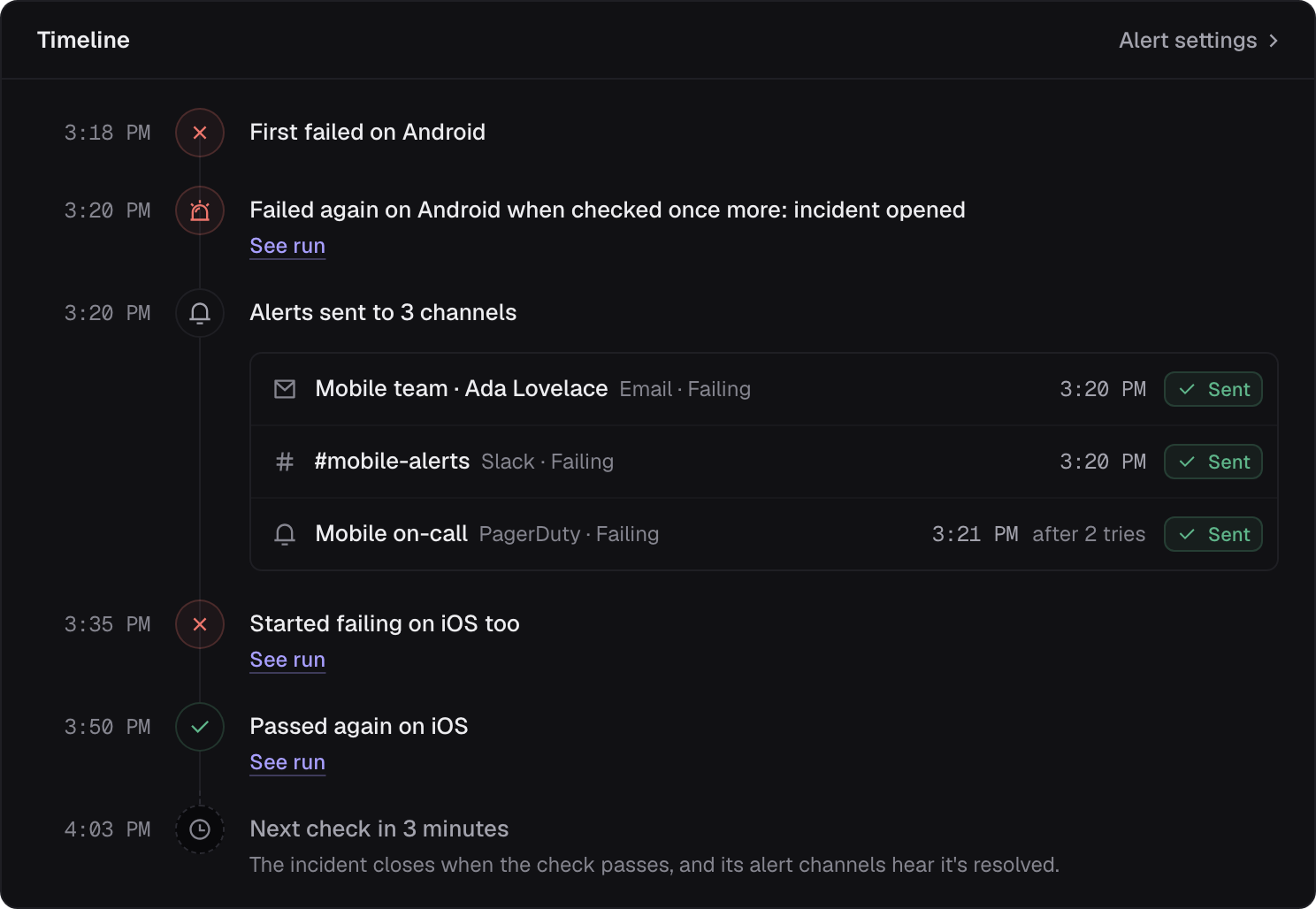
Every failure, recheck and alert, until it passes again, when the same channels hear it's working.

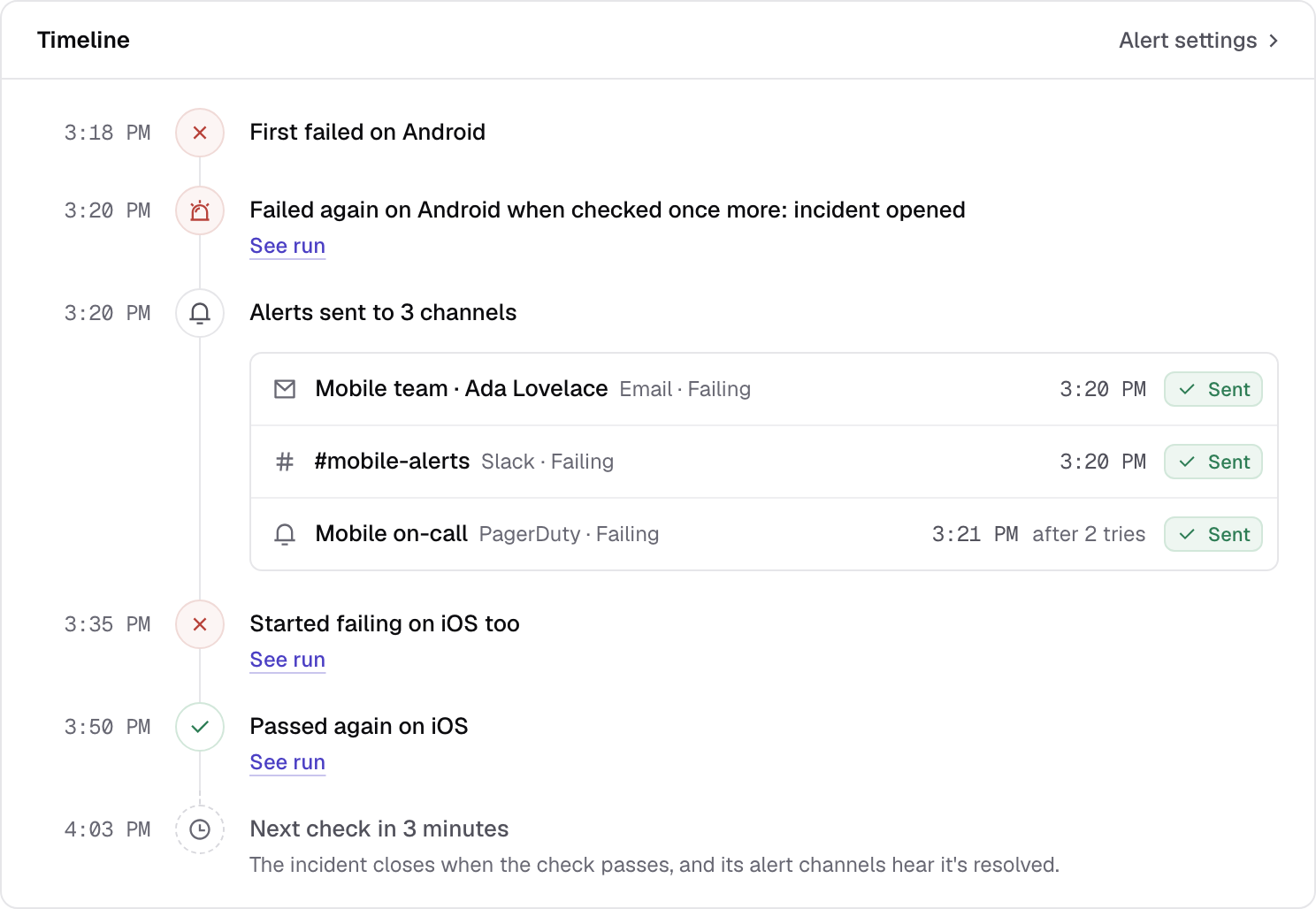
An incident's timeline: first failed on Android, failed again when checked once more and the incident opened, alerts sent to email, Slack and PagerDuty, then failing on iOS too and passing again.

Opened on the second failure

Try a channel before you rely on it

Send test sends a test alert through it, so you know it works before an incident needs it.
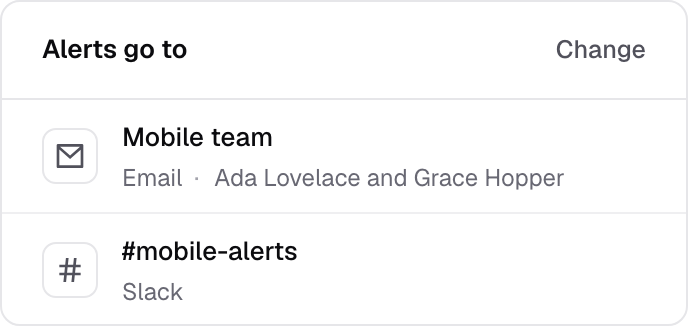
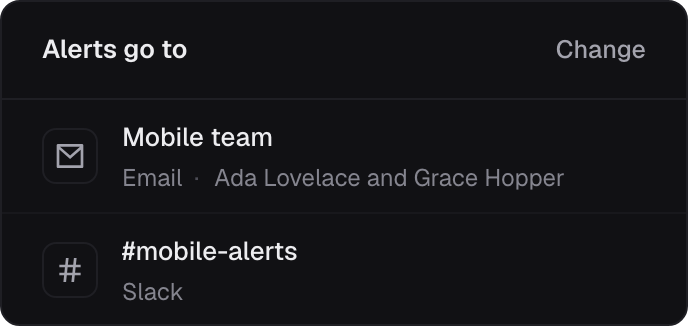
Where a check's alerts go: the mobile team by email, and the #mobile-alerts channel in Slack.

Slower, before it's broken

Trailcam learns how long each journey usually takes on its device, and tells you when a check stays markedly slower, before anything fails.

The step that slowed most

Three slower checks in a row alert the check's channels, with the step that slowed, and they hear again when it's back. Expected it? Make the new time the usual in one click.
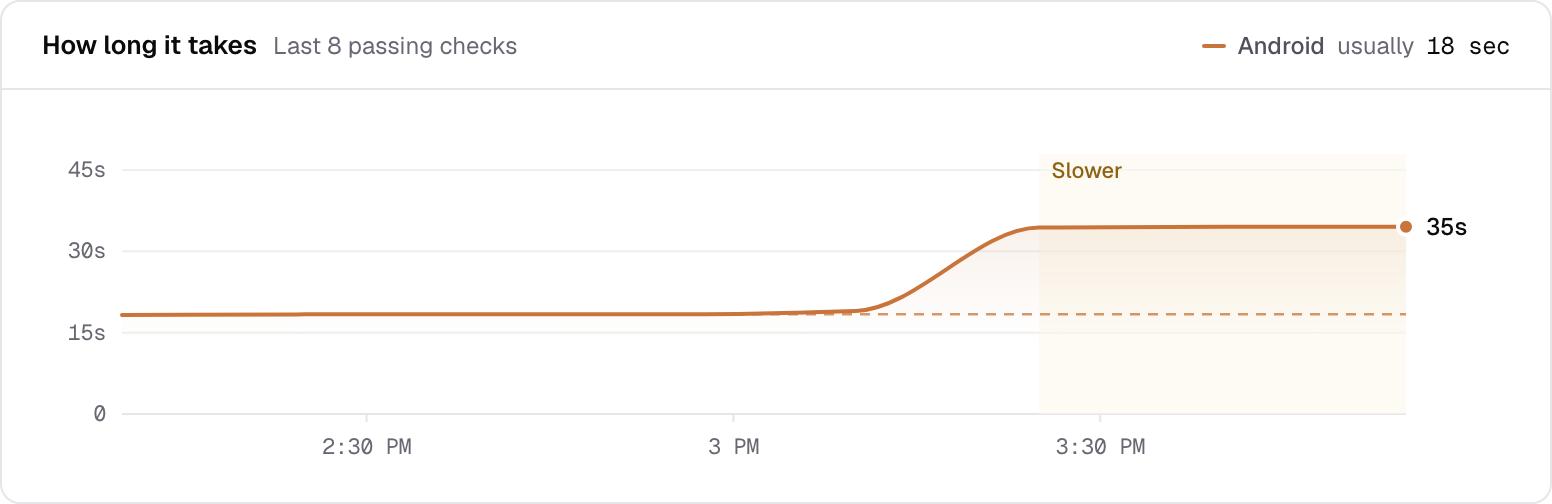
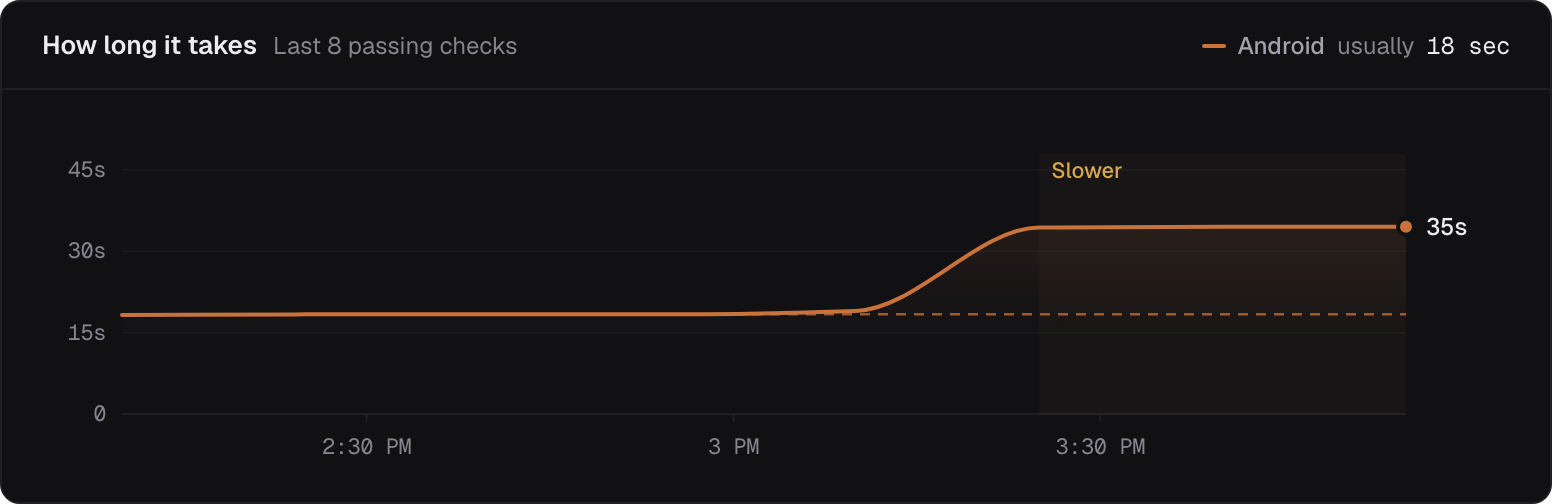
How long Buy a mug takes on Android: its usual 18 seconds, then 35 over the last three checks, shaded as slower.

More of Trailcam

Find out before your customers do

Start with the journey that would hurt most if it broke, usually sign-up or checkout. One reliable check beats ten flaky ones.